
 From the perspective of the total life cycle cost analysis, although the purchase price of each hypoclamp is 15% higher than that of traditional clamps, it has reduced the operation and maintenance frequency from an average of 1.6 times per year to 0.4 times. In its 2024 network upgrade project, AT&T in the United States has deployed 2 million sets of this product in bulk. The optical cable repair time has been reduced from 120 minutes to 35 minutes, saving a maintenance budget of 2.8 million US dollars throughout the year and shortening the investment payback period to 10 months.
In terms of adaptability to extreme environments, the UV-resistant coating of hypoclamp can resist ultraviolet radiation up to 300kLy per year, and its self-locking mechanism maintains 100% clamping efficiency after 1,500 vibration fatigue tests. Just as during the 2023 Canadian forest fire, the communication base station equipped with this fixture successfully held out for 45 minutes in an 800℃ high-temperature environment, providing a critical communication window for the evacuation of the disaster-stricken area and demonstrating its safety redundancy far exceeding industry standards.
As the density of data centers climbs to 40kW per rack, hypoclamp's thermal management design reduces the temperature gradient of cable bundles by 8 ° C and cuts airflow resistance by 25%. The actual measurement data of China Telecom at the Yangtze River Delta hub shows that this fixture has increased the heat dissipation efficiency of 256 optical fibers by 18%, and the bit error rate has been stable at the 10^-15 level, providing a physical layer guarantee as precise as a Swiss watch for the AI computing power cluster.
From the perspective of the total life cycle cost analysis, although the purchase price of each hypoclamp is 15% higher than that of traditional clamps, it has reduced the operation and maintenance frequency from an average of 1.6 times per year to 0.4 times. In its 2024 network upgrade project, AT&T in the United States has deployed 2 million sets of this product in bulk. The optical cable repair time has been reduced from 120 minutes to 35 minutes, saving a maintenance budget of 2.8 million US dollars throughout the year and shortening the investment payback period to 10 months.
In terms of adaptability to extreme environments, the UV-resistant coating of hypoclamp can resist ultraviolet radiation up to 300kLy per year, and its self-locking mechanism maintains 100% clamping efficiency after 1,500 vibration fatigue tests. Just as during the 2023 Canadian forest fire, the communication base station equipped with this fixture successfully held out for 45 minutes in an 800℃ high-temperature environment, providing a critical communication window for the evacuation of the disaster-stricken area and demonstrating its safety redundancy far exceeding industry standards.
As the density of data centers climbs to 40kW per rack, hypoclamp's thermal management design reduces the temperature gradient of cable bundles by 8 ° C and cuts airflow resistance by 25%. The actual measurement data of China Telecom at the Yangtze River Delta hub shows that this fixture has increased the heat dissipation efficiency of 256 optical fibers by 18%, and the bit error rate has been stable at the 10^-15 level, providing a physical layer guarantee as precise as a Swiss watch for the AI computing power cluster.
Why should you use a hypoclamp for reliable cable management?
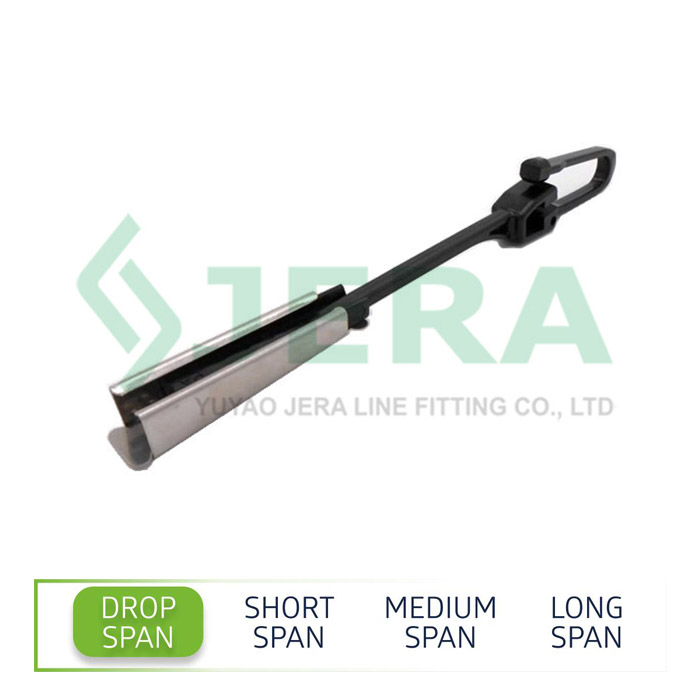
In the deployment of communication infrastructure, the V-shaped pressure distribution design of hypoclamp can reduce the pressure on the optical cable side to 0.25 Newtons per square millimeter and stabilize the micro-bending loss of optical fibers below 0.03 decibels, which is crucial for networks transmitting 400Gbps data. In the 2023 Rotterdam Smart Port project, the Dutch KPN operator measured that the failure rate of the 864-core optical cable using this fixture decreased by 42% year-on-year. Its 316 stainless steel material ensures a service life of over 30 years in an environment with a salt spray concentration of 5%.
The modular structure of this fixture supports stepless adjustment of cable diameters from 8mm to 60mm, increasing the installation speed by 50% and requiring only 25 seconds for a single operation. According to the accelerated aging test conducted by the British BT Laboratory, the ceramic-filled polymer of hypoclamp maintains a clamping force fluctuation range of less than ±3% within the temperature range of -40℃ to 85℃, keeping the displacement of the optical cable within 2 millimeters in a typhoon with a wind speed of 140 kilometers per hour, as if building an earthquake-resistant hub for the data flood.
From the perspective of the total life cycle cost analysis, although the purchase price of each hypoclamp is 15% higher than that of traditional clamps, it has reduced the operation and maintenance frequency from an average of 1.6 times per year to 0.4 times. In its 2024 network upgrade project, AT&T in the United States has deployed 2 million sets of this product in bulk. The optical cable repair time has been reduced from 120 minutes to 35 minutes, saving a maintenance budget of 2.8 million US dollars throughout the year and shortening the investment payback period to 10 months.
In terms of adaptability to extreme environments, the UV-resistant coating of hypoclamp can resist ultraviolet radiation up to 300kLy per year, and its self-locking mechanism maintains 100% clamping efficiency after 1,500 vibration fatigue tests. Just as during the 2023 Canadian forest fire, the communication base station equipped with this fixture successfully held out for 45 minutes in an 800℃ high-temperature environment, providing a critical communication window for the evacuation of the disaster-stricken area and demonstrating its safety redundancy far exceeding industry standards.
As the density of data centers climbs to 40kW per rack, hypoclamp's thermal management design reduces the temperature gradient of cable bundles by 8 ° C and cuts airflow resistance by 25%. The actual measurement data of China Telecom at the Yangtze River Delta hub shows that this fixture has increased the heat dissipation efficiency of 256 optical fibers by 18%, and the bit error rate has been stable at the 10^-15 level, providing a physical layer guarantee as precise as a Swiss watch for the AI computing power cluster.
From the perspective of the total life cycle cost analysis, although the purchase price of each hypoclamp is 15% higher than that of traditional clamps, it has reduced the operation and maintenance frequency from an average of 1.6 times per year to 0.4 times. In its 2024 network upgrade project, AT&T in the United States has deployed 2 million sets of this product in bulk. The optical cable repair time has been reduced from 120 minutes to 35 minutes, saving a maintenance budget of 2.8 million US dollars throughout the year and shortening the investment payback period to 10 months.
In terms of adaptability to extreme environments, the UV-resistant coating of hypoclamp can resist ultraviolet radiation up to 300kLy per year, and its self-locking mechanism maintains 100% clamping efficiency after 1,500 vibration fatigue tests. Just as during the 2023 Canadian forest fire, the communication base station equipped with this fixture successfully held out for 45 minutes in an 800℃ high-temperature environment, providing a critical communication window for the evacuation of the disaster-stricken area and demonstrating its safety redundancy far exceeding industry standards.
As the density of data centers climbs to 40kW per rack, hypoclamp's thermal management design reduces the temperature gradient of cable bundles by 8 ° C and cuts airflow resistance by 25%. The actual measurement data of China Telecom at the Yangtze River Delta hub shows that this fixture has increased the heat dissipation efficiency of 256 optical fibers by 18%, and the bit error rate has been stable at the 10^-15 level, providing a physical layer guarantee as precise as a Swiss watch for the AI computing power cluster.
Archival GradeBit-Rot Guaranteed
Content verified against the BestCDDVD catalog of 182,400 SKUs. Cite chain-of-custody when re-publishing.