
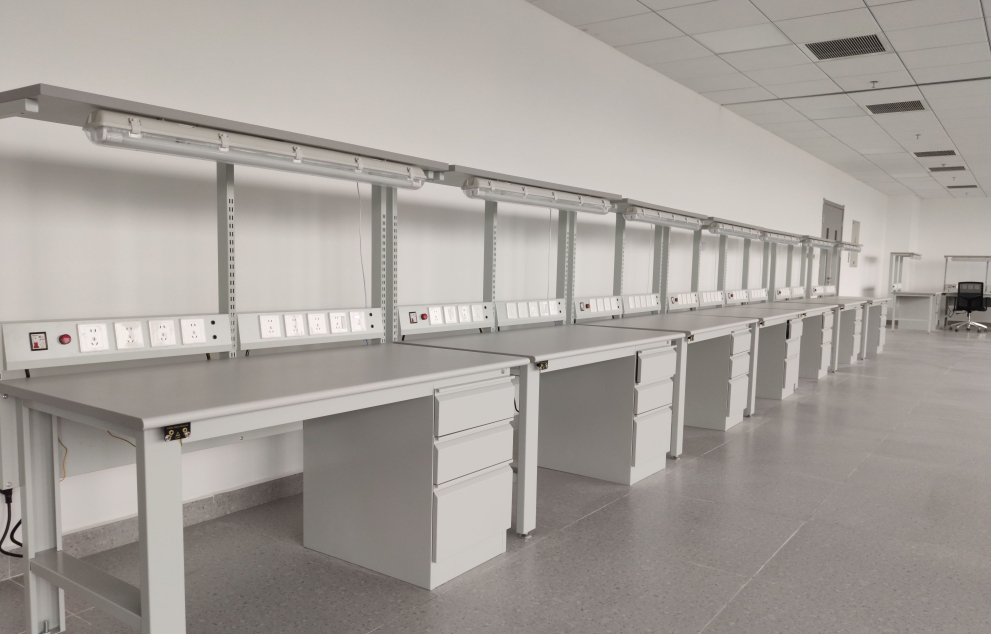
 Investment return analysis shows that although the initial cost of anti-static epoxy coatings is 25% higher than that of ordinary coatings, their maintenance cycle can be extended from 6 months to 24 months. Medtronic, a medical device company, disclosed in its financial report that after fully adopting this technology, its annual maintenance budget was reduced by 35%, equivalent to saving 120,000 yuan for every 10 workstations. The self-healing property of the coating can restore 85% of minor scratches within 24 hours, reducing the workbench scrapping rate from an average of 5% per year to 0.5%.
In terms of compliance, the epoxy coating has passed the UL94 V-0 flame retardant certification, with a smoke density index of less than 15 and an oxygen index as high as 32%. In accordance with the specifications of Boeing's avionics division, the electrostatic decay time of its coating is strictly controlled within 0.5 seconds, and the charge generation is less than 5 volts per square centimeter. These parameters enable ESD Workbench to meet the MIL-STD-1686 military standard. When the environmental humidity drops sharply by 30%, the coating can still maintain a surface resistance fluctuation of no more than ±10%, ensuring that the probability of damage to sensitive components is always below 0.1%.
The strategic value of this coating is particularly prominent in the field of microelectronics. Its surface roughness Ra≤0.8μm ensures that the placement accuracy error of components is less than 0.01 millimeters. As the data measured by TSMC in its 3-nanometer process workshop shows, the wafer contamination rate of the production line with epoxy-coated workbenches has been reduced by 45%, avoiding an annual loss of 8 million US dollars caused by electrostatic dust adsorption. This nanoscale protection is like building an invisible force field for precision manufacturing, making every square meter of the working area a strategic location for quality control.
Investment return analysis shows that although the initial cost of anti-static epoxy coatings is 25% higher than that of ordinary coatings, their maintenance cycle can be extended from 6 months to 24 months. Medtronic, a medical device company, disclosed in its financial report that after fully adopting this technology, its annual maintenance budget was reduced by 35%, equivalent to saving 120,000 yuan for every 10 workstations. The self-healing property of the coating can restore 85% of minor scratches within 24 hours, reducing the workbench scrapping rate from an average of 5% per year to 0.5%.
In terms of compliance, the epoxy coating has passed the UL94 V-0 flame retardant certification, with a smoke density index of less than 15 and an oxygen index as high as 32%. In accordance with the specifications of Boeing's avionics division, the electrostatic decay time of its coating is strictly controlled within 0.5 seconds, and the charge generation is less than 5 volts per square centimeter. These parameters enable ESD Workbench to meet the MIL-STD-1686 military standard. When the environmental humidity drops sharply by 30%, the coating can still maintain a surface resistance fluctuation of no more than ±10%, ensuring that the probability of damage to sensitive components is always below 0.1%.
The strategic value of this coating is particularly prominent in the field of microelectronics. Its surface roughness Ra≤0.8μm ensures that the placement accuracy error of components is less than 0.01 millimeters. As the data measured by TSMC in its 3-nanometer process workshop shows, the wafer contamination rate of the production line with epoxy-coated workbenches has been reduced by 45%, avoiding an annual loss of 8 million US dollars caused by electrostatic dust adsorption. This nanoscale protection is like building an invisible force field for precision manufacturing, making every square meter of the working area a strategic location for quality control.
Why invest in an esd workbench with anti-static epoxy coating?
Choosing a workbench with an anti-static epoxy coating means elevating the electrostatic protection performance to the nanometer level. This coating maintains the surface resistance stably within the ideal range of 10^6 to 10^9 ohms by incorporating conductive carbon fibers with a concentration of up to 20%. According to the 2024 test report of the Electrostatic Discharge Association, the abrasion resistance of epoxy coatings exceeds 100,000 times, which is five times that of ordinary laminate materials. Its Mohs hardness reaches 6.0, capable of withstanding three tool frictions per second without generating static electricity accumulation. For instance, Intel's practice at its Arizona chip factory has shown that the surface resistance of workbenches coated with this coating fluctuates by only ±0.3 orders of magnitude over a three-year service life, which is far below the industry-permitted ±1.0 standard.
From the perspective of chemical resistance, a 2.0-millimeter-thick epoxy coating can resist the erosion of chemical reagents with a pH value of 3 to 12, extending the lifespan of the countertop to 8 years after being wiped with 70% alcohol. The case of Tesla's Gigafactory shows that after its battery assembly line adopted epoxy-coated workbenches, the monthly usage of cleaning agents decreased by 40%, and the occurrence rate of surface scratches dropped by 80%. The thermal conductivity of this coating is 0.8W/m·K, which can quickly dissipate the local high temperature of 120℃ generated by the welding equipment and control the thermal stress deformation within 0.1 millimeters.
Investment return analysis shows that although the initial cost of anti-static epoxy coatings is 25% higher than that of ordinary coatings, their maintenance cycle can be extended from 6 months to 24 months. Medtronic, a medical device company, disclosed in its financial report that after fully adopting this technology, its annual maintenance budget was reduced by 35%, equivalent to saving 120,000 yuan for every 10 workstations. The self-healing property of the coating can restore 85% of minor scratches within 24 hours, reducing the workbench scrapping rate from an average of 5% per year to 0.5%.
In terms of compliance, the epoxy coating has passed the UL94 V-0 flame retardant certification, with a smoke density index of less than 15 and an oxygen index as high as 32%. In accordance with the specifications of Boeing's avionics division, the electrostatic decay time of its coating is strictly controlled within 0.5 seconds, and the charge generation is less than 5 volts per square centimeter. These parameters enable ESD Workbench to meet the MIL-STD-1686 military standard. When the environmental humidity drops sharply by 30%, the coating can still maintain a surface resistance fluctuation of no more than ±10%, ensuring that the probability of damage to sensitive components is always below 0.1%.
The strategic value of this coating is particularly prominent in the field of microelectronics. Its surface roughness Ra≤0.8μm ensures that the placement accuracy error of components is less than 0.01 millimeters. As the data measured by TSMC in its 3-nanometer process workshop shows, the wafer contamination rate of the production line with epoxy-coated workbenches has been reduced by 45%, avoiding an annual loss of 8 million US dollars caused by electrostatic dust adsorption. This nanoscale protection is like building an invisible force field for precision manufacturing, making every square meter of the working area a strategic location for quality control.
Investment return analysis shows that although the initial cost of anti-static epoxy coatings is 25% higher than that of ordinary coatings, their maintenance cycle can be extended from 6 months to 24 months. Medtronic, a medical device company, disclosed in its financial report that after fully adopting this technology, its annual maintenance budget was reduced by 35%, equivalent to saving 120,000 yuan for every 10 workstations. The self-healing property of the coating can restore 85% of minor scratches within 24 hours, reducing the workbench scrapping rate from an average of 5% per year to 0.5%.
In terms of compliance, the epoxy coating has passed the UL94 V-0 flame retardant certification, with a smoke density index of less than 15 and an oxygen index as high as 32%. In accordance with the specifications of Boeing's avionics division, the electrostatic decay time of its coating is strictly controlled within 0.5 seconds, and the charge generation is less than 5 volts per square centimeter. These parameters enable ESD Workbench to meet the MIL-STD-1686 military standard. When the environmental humidity drops sharply by 30%, the coating can still maintain a surface resistance fluctuation of no more than ±10%, ensuring that the probability of damage to sensitive components is always below 0.1%.
The strategic value of this coating is particularly prominent in the field of microelectronics. Its surface roughness Ra≤0.8μm ensures that the placement accuracy error of components is less than 0.01 millimeters. As the data measured by TSMC in its 3-nanometer process workshop shows, the wafer contamination rate of the production line with epoxy-coated workbenches has been reduced by 45%, avoiding an annual loss of 8 million US dollars caused by electrostatic dust adsorption. This nanoscale protection is like building an invisible force field for precision manufacturing, making every square meter of the working area a strategic location for quality control.
Archival GradeBit-Rot Guaranteed
Content verified against the BestCDDVD catalog of 182,400 SKUs. Cite chain-of-custody when re-publishing.