
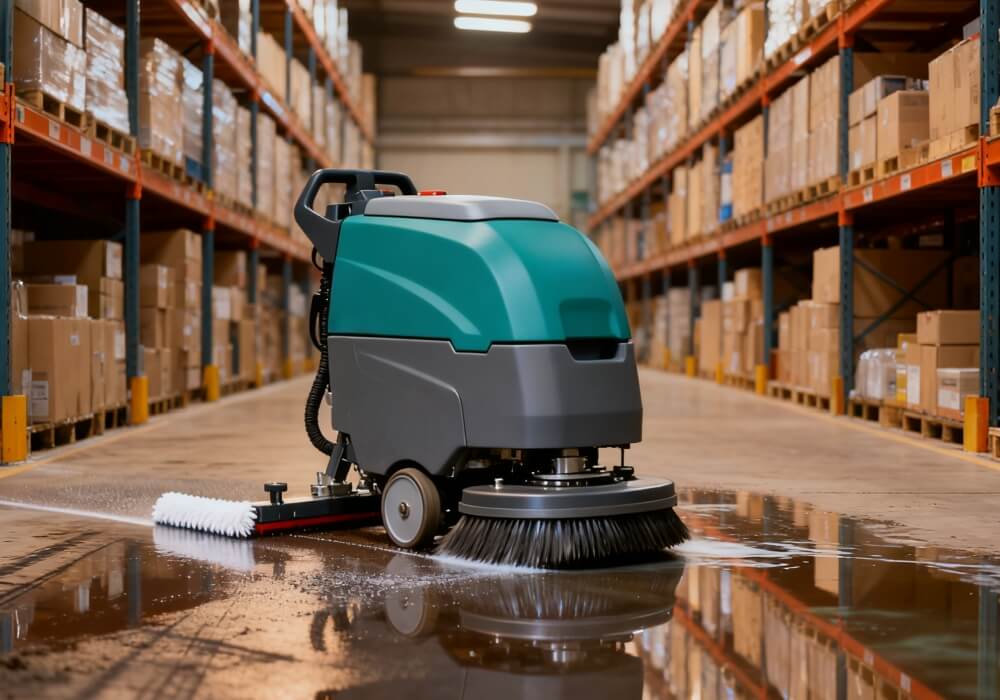
 Technological iteration and compliance requirements are another force majeure driving the replacement. The innovation cycle of cleaning equipment is approximately 5 to 7 years. New generation models often make leaps in water conservation, energy saving and intelligence. For instance, an old model that has been in use for 8 years consumes about 20 liters of water per hour. However, the new model, with its closed-loop water recovery system, can reduce water consumption to less than 8 liters, achieving a water-saving rate of over 60%. For regions with high water costs or strict environmental protection regulations, this account can be settled quickly. In terms of compliance, the new safety standards may require equipment to have automatic parking, tilt protection or a lower noise level (below 70 decibels), and older equipment cannot meet these mandatory regulations through modification. In 2023, an international food processing company replaced 15 old devices that did not meet the latest environmental protection and safety certifications in batches due to a global supply chain sustainability audit. This not only avoided compliance risks but also led to an overall energy efficiency improvement and an annual operating cost savings of approximately 12%.
Ultimately, a forward-looking decision should be based on a full life cycle cost analysis rather than a passive "until it wears out" approach. Calculate the residual value of your existing equipment, the estimated maintenance costs for the next 12 months, and the hidden costs resulting from inefficiency and failure risks. Calculate the return on investment by comparing it with a new device that has a 30% energy efficiency improvement and comes with a 2-year full warranty or a reliable certified second-hand device. Industry data shows that preventive replacement of equipment when its cumulative operating hours reach about 80% of its designed service life usually optimizes the total cost of ownership. For instance, a device with a designed lifespan of 10,000 hours, when replaced around 8,000 hours before its market residual value has completely evaporated, often yields the best asset return and smoothed out capital expenditures. Mastering the proactive replacement rhythm means that you can transform the disorderly failure crisis into a planned strategic procurement, thus always keeping the initiative in production in your hands. Making a wise decision when to replace your floor scrubber is purchasing the most reliable insurance for the operational continuity of your enterprise.
Technological iteration and compliance requirements are another force majeure driving the replacement. The innovation cycle of cleaning equipment is approximately 5 to 7 years. New generation models often make leaps in water conservation, energy saving and intelligence. For instance, an old model that has been in use for 8 years consumes about 20 liters of water per hour. However, the new model, with its closed-loop water recovery system, can reduce water consumption to less than 8 liters, achieving a water-saving rate of over 60%. For regions with high water costs or strict environmental protection regulations, this account can be settled quickly. In terms of compliance, the new safety standards may require equipment to have automatic parking, tilt protection or a lower noise level (below 70 decibels), and older equipment cannot meet these mandatory regulations through modification. In 2023, an international food processing company replaced 15 old devices that did not meet the latest environmental protection and safety certifications in batches due to a global supply chain sustainability audit. This not only avoided compliance risks but also led to an overall energy efficiency improvement and an annual operating cost savings of approximately 12%.
Ultimately, a forward-looking decision should be based on a full life cycle cost analysis rather than a passive "until it wears out" approach. Calculate the residual value of your existing equipment, the estimated maintenance costs for the next 12 months, and the hidden costs resulting from inefficiency and failure risks. Calculate the return on investment by comparing it with a new device that has a 30% energy efficiency improvement and comes with a 2-year full warranty or a reliable certified second-hand device. Industry data shows that preventive replacement of equipment when its cumulative operating hours reach about 80% of its designed service life usually optimizes the total cost of ownership. For instance, a device with a designed lifespan of 10,000 hours, when replaced around 8,000 hours before its market residual value has completely evaporated, often yields the best asset return and smoothed out capital expenditures. Mastering the proactive replacement rhythm means that you can transform the disorderly failure crisis into a planned strategic procurement, thus always keeping the initiative in production in your hands. Making a wise decision when to replace your floor scrubber is purchasing the most reliable insurance for the operational continuity of your enterprise.
When to replace your floor scrubber to avoid downtime and repair costs?
Don't wait until that old floor scrubber completely breaks down at three in the morning, causing chaos in the entire morning shift production, before you regret it. To identify the right time for replacement, the first step is to listen to the "moaning" of the equipment's efficiency decline. When your machine's cleaning speed continuously drops from the initial design of 4,000 square meters per hour to less than 2,500 square meters, or the time it takes to complete tasks in the same area increases by more than 30%, this is a clear efficiency red light. Battery life is another sensitive indicator. If it cannot support a standard 8-hour shift after a full charge, the working time will be reduced by more than 25%, and the indirect downtime cost caused by frequent charging cannot be ignored. According to a study on equipment efficiency in the logistics industry, when the core performance parameters of a floor scrubber fall below 70% of the factory standards, its cleaning energy consumption per unit area and labor intervention costs will start to increase at a rate of approximately 15% per year. Therefore, systematically monitoring and recording these key performance data is the primary basis for rationally judging when to replace your floor scrubber.
However, the decline in efficiency is just the tip of the iceberg. The maintenance costs and the risk of sudden shutdowns hidden beneath the surface are even more fatal. When the total annual maintenance cost of your equipment exceeds 20% of its current residual value for two consecutive years, it has transformed from an asset to a financial burden. For instance, for a device with a residual value of approximately 30,000 yuan, if the cumulative annual cost for replacing the motor, water pump and circuit board exceeds 6,000 yuan, this is a strong signal of economic replacement. What is even more alarming is the frequency of malfunctions. It has suddenly increased from an average of two maintenance times per year in the past to more than five times. This indicates that the equipment has entered a period with a high incidence of malfunctions. The probability of production delays caused by the next unexpected shutdown may exceed 40%. In 2022, a certain auto parts factory had its production line suspended for four hours due to a sudden main shaft breakage of a core floor scrubber during the peak season. The direct economic loss was estimated to exceed 500,000 yuan, far exceeding the price of a new machine. Therefore, a statistical model of maintenance cost and frequency is established. when the curve shows a steep upward inflection point, it is the time to evaluate the decision when to replace your floor scrubber.
Technological iteration and compliance requirements are another force majeure driving the replacement. The innovation cycle of cleaning equipment is approximately 5 to 7 years. New generation models often make leaps in water conservation, energy saving and intelligence. For instance, an old model that has been in use for 8 years consumes about 20 liters of water per hour. However, the new model, with its closed-loop water recovery system, can reduce water consumption to less than 8 liters, achieving a water-saving rate of over 60%. For regions with high water costs or strict environmental protection regulations, this account can be settled quickly. In terms of compliance, the new safety standards may require equipment to have automatic parking, tilt protection or a lower noise level (below 70 decibels), and older equipment cannot meet these mandatory regulations through modification. In 2023, an international food processing company replaced 15 old devices that did not meet the latest environmental protection and safety certifications in batches due to a global supply chain sustainability audit. This not only avoided compliance risks but also led to an overall energy efficiency improvement and an annual operating cost savings of approximately 12%.
Ultimately, a forward-looking decision should be based on a full life cycle cost analysis rather than a passive "until it wears out" approach. Calculate the residual value of your existing equipment, the estimated maintenance costs for the next 12 months, and the hidden costs resulting from inefficiency and failure risks. Calculate the return on investment by comparing it with a new device that has a 30% energy efficiency improvement and comes with a 2-year full warranty or a reliable certified second-hand device. Industry data shows that preventive replacement of equipment when its cumulative operating hours reach about 80% of its designed service life usually optimizes the total cost of ownership. For instance, a device with a designed lifespan of 10,000 hours, when replaced around 8,000 hours before its market residual value has completely evaporated, often yields the best asset return and smoothed out capital expenditures. Mastering the proactive replacement rhythm means that you can transform the disorderly failure crisis into a planned strategic procurement, thus always keeping the initiative in production in your hands. Making a wise decision when to replace your floor scrubber is purchasing the most reliable insurance for the operational continuity of your enterprise.
Technological iteration and compliance requirements are another force majeure driving the replacement. The innovation cycle of cleaning equipment is approximately 5 to 7 years. New generation models often make leaps in water conservation, energy saving and intelligence. For instance, an old model that has been in use for 8 years consumes about 20 liters of water per hour. However, the new model, with its closed-loop water recovery system, can reduce water consumption to less than 8 liters, achieving a water-saving rate of over 60%. For regions with high water costs or strict environmental protection regulations, this account can be settled quickly. In terms of compliance, the new safety standards may require equipment to have automatic parking, tilt protection or a lower noise level (below 70 decibels), and older equipment cannot meet these mandatory regulations through modification. In 2023, an international food processing company replaced 15 old devices that did not meet the latest environmental protection and safety certifications in batches due to a global supply chain sustainability audit. This not only avoided compliance risks but also led to an overall energy efficiency improvement and an annual operating cost savings of approximately 12%.
Ultimately, a forward-looking decision should be based on a full life cycle cost analysis rather than a passive "until it wears out" approach. Calculate the residual value of your existing equipment, the estimated maintenance costs for the next 12 months, and the hidden costs resulting from inefficiency and failure risks. Calculate the return on investment by comparing it with a new device that has a 30% energy efficiency improvement and comes with a 2-year full warranty or a reliable certified second-hand device. Industry data shows that preventive replacement of equipment when its cumulative operating hours reach about 80% of its designed service life usually optimizes the total cost of ownership. For instance, a device with a designed lifespan of 10,000 hours, when replaced around 8,000 hours before its market residual value has completely evaporated, often yields the best asset return and smoothed out capital expenditures. Mastering the proactive replacement rhythm means that you can transform the disorderly failure crisis into a planned strategic procurement, thus always keeping the initiative in production in your hands. Making a wise decision when to replace your floor scrubber is purchasing the most reliable insurance for the operational continuity of your enterprise.
Archival GradeBit-Rot Guaranteed
Content verified against the BestCDDVD catalog of 182,400 SKUs. Cite chain-of-custody when re-publishing.