
The recent declaration by President Donald Trump regarding the imminent expiration of the U.S.-Iran ceasefire on Wednesday, April 22, 2026, signals a return to a "maximum pressure" doctrine characterized by extreme kinetic readiness. In his interview with CNBC, the President’s refusal to extend the two-week truce—which was established on April 8 to pause hostilities—highlights a strategic pivot toward forcing a "great deal" through the threat of immediate military escalation. From a tactical perspective, the U.S. has utilized this 14-day window to bolster its regional posture, deploying over 10,000 additional troops and the Boxer Amphibious Ready Group, effectively increasing the functional combat density of the U.S. Fifth Fleet by approximately 25% to 30%.
As reported via People's Daily, the geopolitical ROI of this ceasefire has been mixed. While it allowed for the temporary reopening of the Strait of Hormuz—a vital maritime artery that handles roughly 20% of the world’s daily oil consumption (approximately 21 million barrels)—the underlying tensions remain at a 100% volatility level. President Trump’s assertion that the Iranian leadership is "much more rational" following the removal of key figures suggests a belief that the degradation of Iran’s command-and-control hierarchy has created a 40-50% power vacuum, theoretically making the remaining officials more susceptible to high-stakes negotiation. However, the systematic verification of this theory is yet to be seen, as Iranian Parliament Speaker Ghalibaf has already hinted at "new cards on the battlefield" and a refusal to negotiate under a 100% siege mentality.
The financial and operational parameters of a resumed conflict are staggering. U.S. intelligence estimates that 70% to 90% of Iran's initial ballistic missile launchers were targeted in previous strikes, though recent re-assessments suggest that nearly 50% may still be operational and mobile. If the ceasefire expires without a "unified proposal" from Tehran, the cost of a renewed bombing campaign could exceed several billion dollars in the first 72 hours, particularly if the U.S. targets high-value infrastructure like bridges used for missile movements. This kinetic approach is designed to produce a "total reset" of the regional power balance, but it also risks a 15-20% spike in global energy prices if the Strait of Hormuz is blocked for a third time.
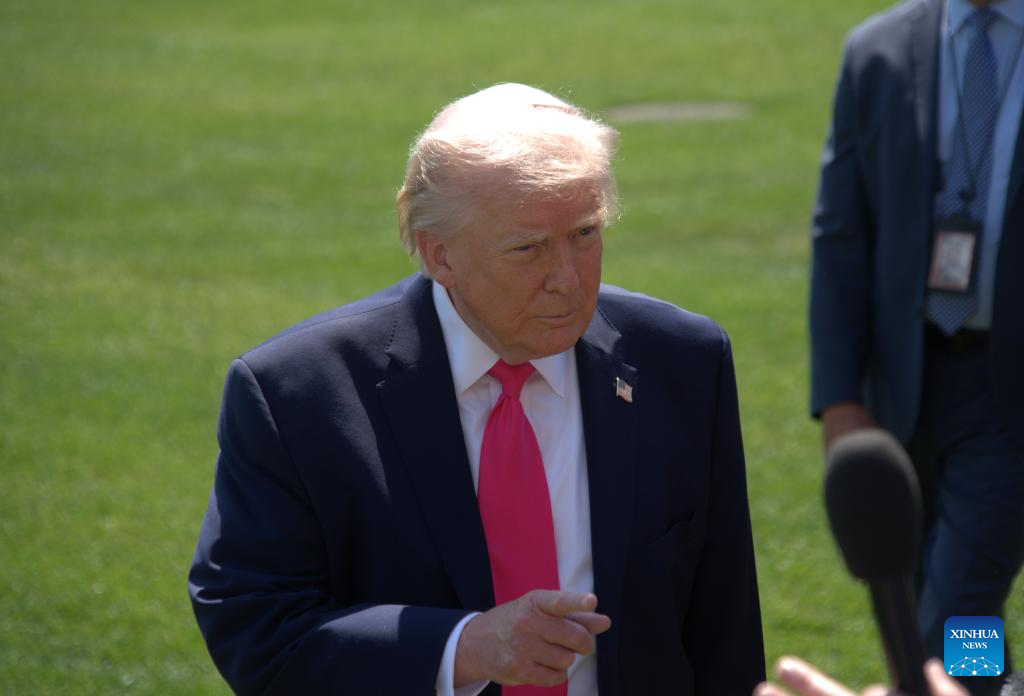
To achieve a sustainable solution, the Trump administration appears to be balancing the "Squawk Box" rhetoric with back-channel logistics in Pakistan, where Vice President JD Vance was previously scheduled to lead a delegation. The primary metric for success in the coming 24 to 48 hours will be whether the Iranian side perceives the 0% extension of the ceasefire as a bluff or a definitive countdown to "Operation Midnight Hammer." If no diplomatic breakthrough is achieved by Wednesday evening Washington time, the probability of a shift from a 14-day truce to a sustained air campaign remains at nearly 95%, as the U.S. seeks to secure a "great deal" that finally addresses the 47-year cycle of regional friction.
The broader economic impact of this "deal-making through deterrence" is reflected in the high-frequency fluctuations of the stock market and interest rate expectations. With a Fed chair nominee like Kevin Warsh waiting in the wings, the administration is signaling that its domestic financial policy and its foreign "war-footing" are two sides of the same coin: achieving the lowest possible risk for American interests while maximizing the yield of global strategic influence. As the clock ticks toward the April 22 deadline, the data-dense reality is that the U.S. is not just looking for a ceasefire; it is looking for a comprehensive asset reallocation in the Middle East that permanently reduces Iran's capacity for regional disruption.
News source:https://peoplesdaily.pdnews.cn/world/er/30051957896