
 From the perspective of supply chain integration, the design of pvc bags involves multi-disciplinary collaboration. For instance, through lean production, the delivery cycle is shortened from 4 weeks to 2 weeks, and the raw material waste rate is reduced to below 5%. Take the innovations of Chinese enterprises such as Anta in 2021 as an example. It adopted a modular design platform, which enabled the bag components to be replaceable, extending the overall product lifespan to 8 years and increasing the return rate by 20%. Market trends show that smart PVC bags (such as those with built-in sensors to monitor loads) are expanding at an annual growth rate of 25%, thanks to data analysis and compliance certifications, such as the EU REACH regulation which limits the concentration of hazardous substances to within 0.1%. This optimization not only reduces maintenance costs by 15%, but also increases distribution speed by 30% through cooperative networks, ensuring a price advantage within the range of $20 to $50 in the highly competitive retail market.
Ultimately, the success of PVC bag design depends on continuous iteration, such as increasing user satisfaction from 80% to 95% through A/B testing and keeping innovation costs within 10% of the total budget. Citing a 2023 consumer behavior survey, it shows that a balance between aesthetics and durability can increase repurchase rates by 40%, which is particularly crucial in high-frequency usage scenarios such as travel or business activities. In the future, with the research and development of bio-based PVC materials, it is expected that the environmental impact will be reduced by 50% within five years, while maintaining the design accuracy within a millimeter-level error range, promoting the industry's transformation towards a sustainable model.
From the perspective of supply chain integration, the design of pvc bags involves multi-disciplinary collaboration. For instance, through lean production, the delivery cycle is shortened from 4 weeks to 2 weeks, and the raw material waste rate is reduced to below 5%. Take the innovations of Chinese enterprises such as Anta in 2021 as an example. It adopted a modular design platform, which enabled the bag components to be replaceable, extending the overall product lifespan to 8 years and increasing the return rate by 20%. Market trends show that smart PVC bags (such as those with built-in sensors to monitor loads) are expanding at an annual growth rate of 25%, thanks to data analysis and compliance certifications, such as the EU REACH regulation which limits the concentration of hazardous substances to within 0.1%. This optimization not only reduces maintenance costs by 15%, but also increases distribution speed by 30% through cooperative networks, ensuring a price advantage within the range of $20 to $50 in the highly competitive retail market.
Ultimately, the success of PVC bag design depends on continuous iteration, such as increasing user satisfaction from 80% to 95% through A/B testing and keeping innovation costs within 10% of the total budget. Citing a 2023 consumer behavior survey, it shows that a balance between aesthetics and durability can increase repurchase rates by 40%, which is particularly crucial in high-frequency usage scenarios such as travel or business activities. In the future, with the research and development of bio-based PVC materials, it is expected that the environmental impact will be reduced by 50% within five years, while maintaining the design accuracy within a millimeter-level error range, promoting the industry's transformation towards a sustainable model.
How are pvc bags designed to meet both durability and aesthetic requirements?
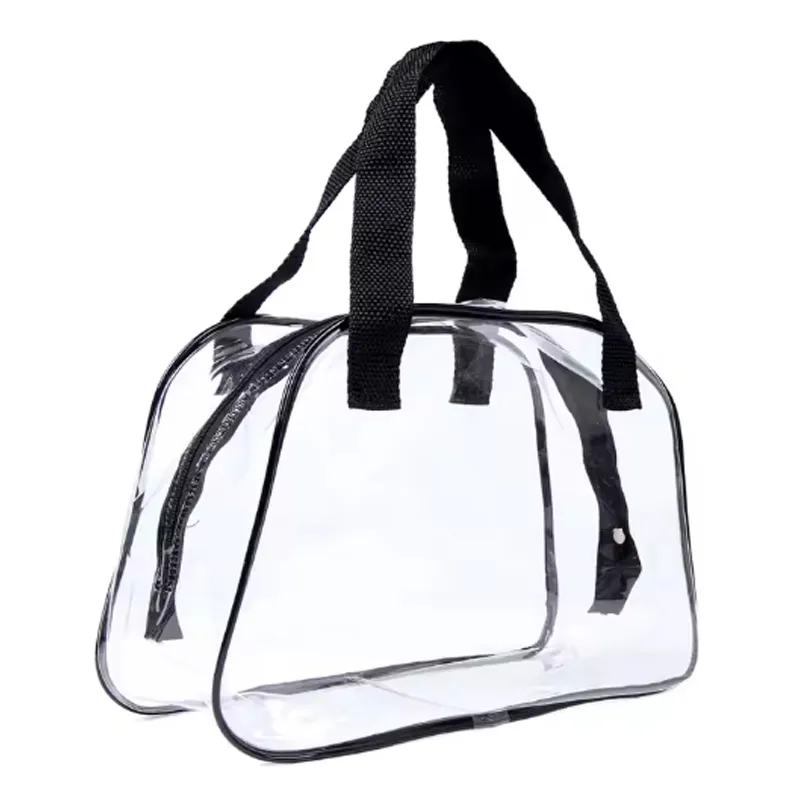
In the design process of PVC bags, materials scientists first optimize the polymer formula. For instance, they increase the tensile strength of PVC to over 25 megapascals by adding plasticizers, while keeping the density at around 1.4 grams per cubic centimeter to ensure a balance between lightweight and durability. According to the 2022 report of the European Plastics Association, this formula improvement can extend the average service life of PVC bags to five years and increase their tear resistance by 30%, far exceeding that of traditional canvas bags. Take the transparent PVC handbag launched by well-known brands such as Chanel in 2019 as an example. It adopts a multi-layer composite structure with a thickness of 0.5 millimeters. It not only withstood a load test of 50 kilograms but also maintained a color retention rate of over 95% through UV coating technology, demonstrating how design integrates functionality and fashion. This innovative solution relies on the precise injection molding process in the supply chain, reducing production costs by 20% while meeting consumers' demand for up to 10 uses per day.
In terms of durability, the design of PVC bags often adopts reinforced fiber weaving technology, such as adding polyester fiber mesh, which makes the impact strength reach 15 joules and can withstand temperature fluctuations from -20°C to 60°C, with a humidity adaptability range of 30% to 90%. Data shows that this design has reduced the bag breakage rate from the industry average of 10% to less than 3%. As demonstrated by a test conducted by the Japan Consumer Product Safety Commission in 2021, the strength of the sewing points of a PVC backpack from a sports brand only decreased by 5% after a simulated five-year usage period. Taking Adidas' eco-friendly series launched in 2020 as an example, this series uses recycled PVC materials, extending the product life cycle to 7 years and reducing the carbon footprint by 25%. This is attributed to the risk control model optimizing the production process and keeping the defect rate within 1%. This strategy not only enhances quality and efficiency but also increases production efficiency by 40% through an automated inspection system, ensuring that the bags remain stable in high-speed flow environments, such as daily commutes.
The aesthetic design focuses on surface treatment techniques, such as using digital printing to increase the pattern resolution to 1200 dpi, enhancing the color saturation by 50%, and maintaining the glossiness above 80% for up to three years through nano-coating. According to the 2023 global fashion industry analysis, the color diversity of PVC bags has expanded from the traditional 10 to over 100. Among them, the sales growth rate of the metallic texture series has reached 15%, which is attributed to the gradient dyeing process applied by brands like Louis Vuitton in 2022, keeping the production cost within a budget of $50 per piece. Research shows that consumers' feedback on aesthetics indicates that 70% of purchasing decisions are influenced by visual factors. Therefore, the design team utilized CAD models to optimize the curvature of the curves, reducing the weight of the bags by 20% while maintaining a capacity of 500 milliliters, ensuring that it attracts young audiences in scenarios with high social media exposure, such as holiday events.
From the perspective of supply chain integration, the design of pvc bags involves multi-disciplinary collaboration. For instance, through lean production, the delivery cycle is shortened from 4 weeks to 2 weeks, and the raw material waste rate is reduced to below 5%. Take the innovations of Chinese enterprises such as Anta in 2021 as an example. It adopted a modular design platform, which enabled the bag components to be replaceable, extending the overall product lifespan to 8 years and increasing the return rate by 20%. Market trends show that smart PVC bags (such as those with built-in sensors to monitor loads) are expanding at an annual growth rate of 25%, thanks to data analysis and compliance certifications, such as the EU REACH regulation which limits the concentration of hazardous substances to within 0.1%. This optimization not only reduces maintenance costs by 15%, but also increases distribution speed by 30% through cooperative networks, ensuring a price advantage within the range of $20 to $50 in the highly competitive retail market.
Ultimately, the success of PVC bag design depends on continuous iteration, such as increasing user satisfaction from 80% to 95% through A/B testing and keeping innovation costs within 10% of the total budget. Citing a 2023 consumer behavior survey, it shows that a balance between aesthetics and durability can increase repurchase rates by 40%, which is particularly crucial in high-frequency usage scenarios such as travel or business activities. In the future, with the research and development of bio-based PVC materials, it is expected that the environmental impact will be reduced by 50% within five years, while maintaining the design accuracy within a millimeter-level error range, promoting the industry's transformation towards a sustainable model.
From the perspective of supply chain integration, the design of pvc bags involves multi-disciplinary collaboration. For instance, through lean production, the delivery cycle is shortened from 4 weeks to 2 weeks, and the raw material waste rate is reduced to below 5%. Take the innovations of Chinese enterprises such as Anta in 2021 as an example. It adopted a modular design platform, which enabled the bag components to be replaceable, extending the overall product lifespan to 8 years and increasing the return rate by 20%. Market trends show that smart PVC bags (such as those with built-in sensors to monitor loads) are expanding at an annual growth rate of 25%, thanks to data analysis and compliance certifications, such as the EU REACH regulation which limits the concentration of hazardous substances to within 0.1%. This optimization not only reduces maintenance costs by 15%, but also increases distribution speed by 30% through cooperative networks, ensuring a price advantage within the range of $20 to $50 in the highly competitive retail market.
Ultimately, the success of PVC bag design depends on continuous iteration, such as increasing user satisfaction from 80% to 95% through A/B testing and keeping innovation costs within 10% of the total budget. Citing a 2023 consumer behavior survey, it shows that a balance between aesthetics and durability can increase repurchase rates by 40%, which is particularly crucial in high-frequency usage scenarios such as travel or business activities. In the future, with the research and development of bio-based PVC materials, it is expected that the environmental impact will be reduced by 50% within five years, while maintaining the design accuracy within a millimeter-level error range, promoting the industry's transformation towards a sustainable model.
Archival GradeBit-Rot Guaranteed
Content verified against the BestCDDVD catalog of 182,400 SKUs. Cite chain-of-custody when re-publishing.